This is a big topic, so today we’re starting with a brief overview of trauma and the chronic stress response. Trauma is an emotional and/or physical response to danger or life-threatening events. Chronic stress is the continuous activation of the body’s stress response system due to exposure to ongoing stress and/or traumatic environments.
Types of trauma (simplified):
Acute trauma occurs typically within the first month of a single event trauma (a car accident, physical attack, unexpected losses, natural disaster, etc.)
Chronic trauma arises from repeated and prolonged exposure to highly stressful events. It’s not just a one-time occurrence but something that happens over an extended period (chronic illness, war, systemic discrimination such as racism, homophobia, neglect, homelessness, emotional abuse, etc.)
Complex trauma is exposure to multiple, varied, and often interpersonal traumatic events, typically over a prolonged period. It usually involves harm, exploitation, or neglect from someone you depend on or trust (childhood abuse, repeated domestic violence, etc.)
How does trauma and chronic stress response look like?
Fight, Flight, Freeze, Fawn, Flop (Faint, and Fine)
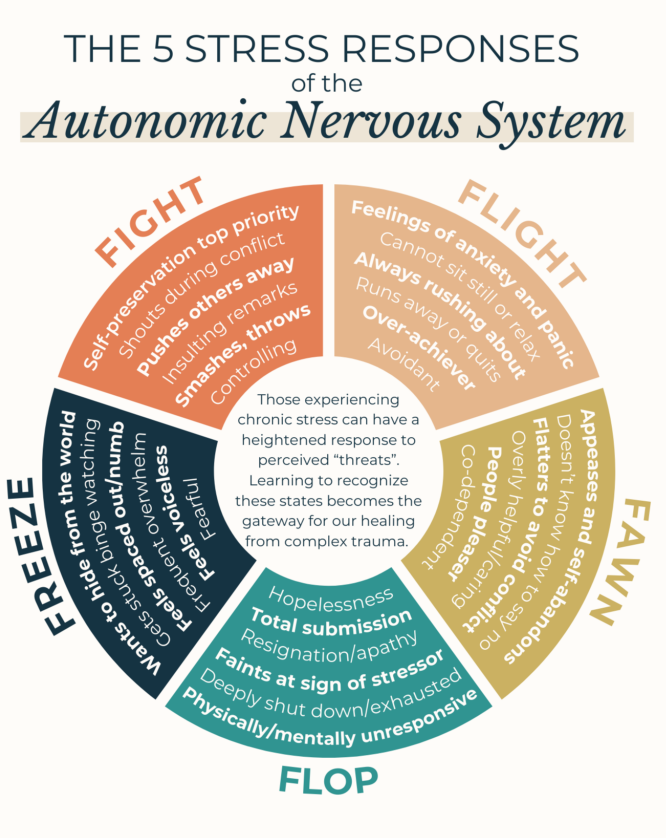
Image from Primal Trust
If you notice yourself in any of these categories, please be gentle with yourself. Acknowledging and bringing awareness to your experience is the first step. Please don't hesitae to seek support and care, and find tools that work for you.
Some Resources for Coping Strategies and Assesment:
NAMI 7 Tools For Managing Traumatic Stress
List of Somatic Practices to Support Nervous System Regulation